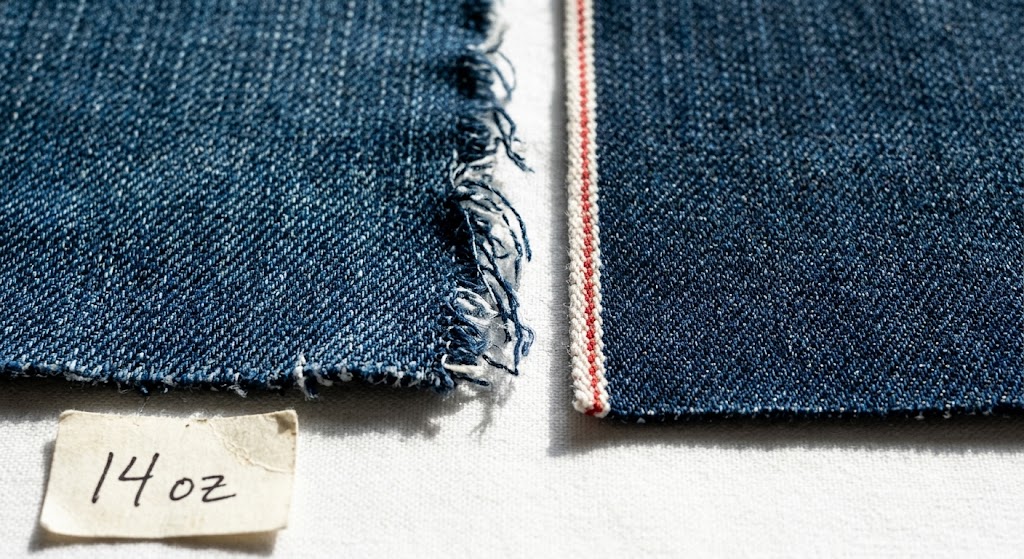
Denim has more mythology per square centimetre than any other fabric. Part of it is earned — heritage mills and old shuttle looms produce fabric with real, distinctive character. But a fair amount of the language around denim exists to justify a price, not to transmit useful information. The most useful question to ask about any denim claim is not whether the story is true, but whether it changes how the fabric will perform in the garment you're making.
Selvedge: a real construction feature, not a quality guarantee
Selvedge denim is woven on narrow shuttle looms that produce a self-finished edge, which eliminates fraying at the outseam. That narrower, slower loom construction, the distinctive finished-edge outseam, and the heritage pedigree are all genuine and worth paying for on their own terms — they're just aesthetic and historical reasons, not performance ones.
Where the claim overreaches is treating selvedge as a proxy for durability. Loom type alone isn't a guarantee of quality: a well-made projectile-loomed 14 oz denim can outperform a poorly made shuttle-loomed selvedge in durability and everyday wear. Imagine two 14 oz denims side by side — one shuttle-loomed selvedge from a heritage mill, one projectile-loomed from a modern facility. If the second has better yarn consistency, tighter process control, and superior dye fixation, it can easily outlast the first. The loom tells you how the fabric was made. It doesn't tell you how it will hold up.
Ringspun vs open-end: the gap is closing
Ringspun yarn is spun in a continuous twisting process that produces a tighter, smoother yarn. Open-end spun yarn is faster and cheaper to produce with a slightly harsher hand feel. That difference was much more pronounced thirty years ago. Modern open-end spinning has narrowed the gap considerably, and in many commercial fabrics the difference is much smaller than marketing language suggests. If a mill charges a significant premium for ringspun without being able to show you a comparative hand-feel sample, ask why.
Sanforized vs unsanforized: the shrinkage question
Sanforized denim has been pre-shrunk mechanically during finishing, so it holds close to its purchased size through washing. Unsanforized (raw) denim hasn't, and typically shrinks 5–10% on its first soak — the basis for the elaborate "soak and wear it in" rituals raw-denim enthusiasts follow. Neither is objectively better; they're different finishing choices with different implications for sizing. What matters is that you know which one you're specifying, and that your size chart and care instructions account for it. Specifying unsanforized denim without warning the wearer is how you end up with a customer whose jeans no longer fit after the first wash.
What specs actually matter
Marketing language isn't useless — it often tells you how a fabric was made or where it came from, and that can matter for brand story and price positioning. But those details only predict performance if you can connect them to a measurable outcome. Specifications do that directly: weight (oz per square yard, confirmed post-wash), fibre content, weave structure (3×1 twill, 2×1, broken twill), shrinkage after three washes, stretch recovery for stretch denim, and colour fastness. Before paying a premium for a heritage claim, ask: what's the post-wash weight? How much shrinkage should I expect? What's the fibre composition? Is there independent colour-fastness data? And, if none of that answers it — why does this feature actually improve performance? Stories about heritage mills and antique looms can explain a fabric's origin and character, but they won't tell you how much it shrinks or how well the dye holds after repeated washing. Specifications predict performance. Stories don't.